Top Picks: Team Members Share Their Favorite Books of 2025

Books have a unique way of connecting us, sparking new ideas, and offering fresh perspectives. This year, our team members have shared their favorite reads of 2025, revealing a diverse mix of genres, themes, and voices. Whether you enjoy gripping fiction, insightful non-fiction, or imaginative worlds, this collection offers something for every reader. Let’s explore the books that captured our team’s attention and why they stand out.

Team Favorites: Fiction and Non-Fiction
Behind every strong research team is a community of readers. Books shape how we think, teach us how to ask better questions, and sometimes simply remind us why stories and ideas matter in the first place. In this post, we invite you to meet our team through the books they love most—spanning fiction and academic scholarship. From novels that have stayed with them long after the final page to works of research that have fundamentally influenced their thinking, these selections offer a window into the intellectual curiosities, values, and inspirations that inform our work.
Here is what Larysa wrote about the books she read in 2025.
A year of shifting perspectives
The year 2025 was marked by challenges, trials, and important shifts in my personal and professional perspective. This evolution was reflected in the books I chose to read. As part of my doctoral research, I focus on the experiences of Ukrainian children studying in Polish schools. Understanding their viewpoints—their dreams, their sense of self in the present, and their visions for the future—is central to my work. For this reason, much of my reading this year centered on migration and on developing a deeper understanding of children and adolescents.
Understanding childhood and well-being

One of the most insightful books I read this year was Teens on the Brink (Nastolatki na krawędzi), written as a dialogue between the journalist Krystyna Romanowska and two experienced child psychiatrists, Agnieszka Dąbrowska and Marta Niedźwiedzka. The book explores the intersections between age (adults, children, adolescents) and well-being, both physical and mental. For me, it became a valuable addition to my professional toolkit, particularly in helping me better understand the everyday challenges faced by teenagers. A central theme—one that resonated strongly with my research—is the persistent difficulty young people encounter in finding a common language with adults.
Migration, culture, and mental health

Another interdisciplinary work that shaped my thinking was Jacek Kubitski’s Psychology of Migration. As a clinical psychotherapist, Kubitski examines how cultural context influences mental health when people change their lives and move to another country. He addresses cultural barriers, loneliness, language acquisition, and opportunities for personal development. Although the book approaches migration from a psychiatric perspective, Kubitski invokes a principle central to anthropology: accurate observation does not guarantee accurate interpretation. As he writes, “In principle, it is not difficult to describe the behavior of the inhabitants of a given country. It is much more difficult to explain the observed differences. Observations can be accurate, but their interpretations are not.”
Rethinking education and creativity

Two additional books that accompanied me in 2025 focus on children’s education: The Element and How School Kills Creativity, both by Ken Robinson and Lou Aronica. Sir Ken Robinson, one of the most influential voices in contemporary education, argued nearly twenty years ago that education systems need fundamental transformation. His 2006 TED Talk, Do schools kill creativity?, remains one of the most viewed talks on the platform, and many of the issues he raised continue to be relevant today. Both books emphasize the need to rethink how we approach education—how we recognize talent, nurture curiosity, and create environments in which children’s strengths can flourish.
What connects these books?
Across disciplines—anthropology, psychology, psychiatry, and education—these books share a common aim: to challenge existing attitudes, environments, and educational methods in how we understand and support children and young people. They all begin with individual stories of change, from which emerges a broader call to action.
For me, the key message is clear: every child has unique talents, interests, and ways of perceiving the world. Our task is to create environments—“the Elements,” in Robinson’s and Aronica’s terms—in which these talents and interests can develop most fully. It is also important to remember that “the best” does not always mean the biggest, the neatest, or the fastest. Sometimes it simply means what is best for that moment, for that child, in that particular context.
And here are a few words from Wiktoria.
Reading as refuge and inspiration
This year brought me a number of novels that stayed with me long after I turned the final page, especially during the slower rhythm of the summer months. I found myself drawn to quiet, reflective stories—books that offered a sense of calm while I was deeply immersed in my own writing. Reading became not just a way to rest, but a way to remain connected to language and storytelling, even during long days spent shaping my own texts.
Quiet novels and inner repair

Two novels by Joanna Bator were particularly meaningful to me: Purezento and Ucieczka niedźwiedzicy.
Purezento introduces the Japanese philosophy of kintsugi, the art of repairing broken ceramics with gold. Set in Japan, the novel unfolds gently and patiently, inviting the reader into a world where mending—of both objects and inner selves—takes time, care, and attention. As I followed this slow, attentive journey of acknowledging fractures and rebuilding with precision, I found the experience deeply calming. The metaphor of kintsugi stayed with me long after I finished the book, influencing how I think about learning, creativity, and healing—reminding me that repair is not about erasing cracks, but about honoring them with patience and care.
Fragmentation, identity, and emotional resonance

Ucieczka niedźwiedzicy [lit. The escape of the female bear] offered a very different reading experience. Rather than a single linear narrative, it felt like a constellation of stories connected by themes of identity, desire, and the search for one’s inner core. At times, the fragmentation and lack of resolution frustrated me. Yet that frustration became part of the book’s power. It asked me to slow down, sit with uncertainty, and trust my own interpretations instead of waiting for clear answers. The novel made me think more deeply about how stories are connected—not only through plot, but through emotional resonance and shared questions.
Writing, ethics, and responsibility

Alongside fiction, I was also searching for academic works that could offer new ways of thinking about writing and knowledge production. One book that left a lasting impression was Olga Kaczmarek’s Inaczej niż pisać. Lévinas i antropologia postmodernistyczna [lit. Something other than writing. Lévinas and postmodern anthropology.]. The book prompted me to reflect on the purpose of writing and the ethical dimensions of communication, particularly within anthropology. Kaczmarek presents writing as a relationship—a space of responsibility, encounter, and subtle exchange between writer and reader. This perspective encouraged me to approach my own work with greater attentiveness and sensitivity.
Rethinking resilience as lived experience

Because one of the research articles I worked on this year focused on resilience, agency, and engagement among migrant parents, I also sought literature that combined solid theoretical grounding with practical insight. This led me to Glenn R. Schiraldi’s Siła rezyliencji. Jak poradzić sobie ze stresem, traumą i przeciwnościami losu. The book’s accessible language, practical exercises, and research-based approach helped me see resilience not only as an academic concept, but as an everyday, lived process of adaptation, recovery, and forward movement. It added a more personal dimension to how I think about resilience in both research and life.
Looking ahead
As I look ahead to another year filled with writing plans, I hope to discover new books—both fiction and anthropological works—that challenge, provoke, and inspire. I look forward to continuing this balance between reading for pleasure and reading for research. And, as always, I am very open to book recommendations.
Katarzyna had the following to say about her reading in 2025:
Myth Reforged: Poetry, Humanity, and the Mabinogion

When I reflect on my reading history in 2025, the first dominant note is struck by a little yet powerful book of poetry titled The Bramble King by Catherine Fisher (published by Seren, an imprint of Poetry Wales Press, 2019). As an anthropologist, I never cease to be intrigued by the powerful grip of myths, sustained over centuries, incessantly reforged and reemerging in the stories we tell ourselves as societies. I met Cathrine last summer, at a mentored writing retreat in Scotland, where she introduced us to the world of Welsh myths of the Mabinogion cycle and their contemporary incarnations. The Bramble King is a collection of poems that explode specific parts of these ancient stories into quasi-embodied experiences, rendering the mythical figures ever so human, so familiar. A feat of writing and a feast for the reader!
Bearing Witness at the Border

Reading Pinezka. Historie z granicy polsko-białoruskiej („The Pin. Stories From the Polish-Belorussian Border”, Czarne, 2024) by the splendid reportage artist Urszula Glensk, was a bitter but necessary experience. Poignant, fearless and a tour de force of moral integrity, the book foregrounds human experience – of people on the move, people on the watch, people on the border – that often remained hidden, subsumed under the news headings reporting on the migration-driven “humanitarian crisis” that has unfurled on the Polish-Belorussian, and now militarized border, since 2021. Even though it is an extremely challenging read, I read Pinezka twice and I felt the tears that accompanied both of these readings were cleansing. I then had the honour to talk with Professor Glensk about her book at the Mountains of Literature Festival in July, where the public (also in tears) acknowledged her work by standing ovation.
Imagining Other Ways of Being Human

A whole series of equally moving reading moments were brought by an encounter with Nazan Üstündağ and her The Mother, The Politician, and the Guerrilla: Women’s Political Imagination in the Kurdish Movement (Fordham University Press, 2023). An anthropological exploration of both the theory and praxis of the Kurdish Women’s Freedom Movement, this brilliant monograph presents not only the movement’s collective thought, e.g. through interviews, vignettes and the Kurdish guerilla leader Abdullah Öcalan’s writings on freedom, truth, and the search for a new “genre of human”, but also brings it in conversation with the decolonial theory of Indigenous and Black Studies. The author relentlessly tracks the potential of social exclusion, manifesting in its most radical form – as exclusion from being human in colonial and capitalist civilization – as one that gives rise to imagining and practicing other ways of being human, e.g. through hevalti (friendship) “a the main form of longing and belonging in her [the guerilla’s] life” (p.143).
Poetry, Science, and Wonder as Refuge

Throughout the year, I found both respite and inspiration in a wonderfully illustrated The Universe in Verse: 15 Portals to Wonder Through Science & Poetry by Maria Popova. Featuring little poetry gems – including the poem PI by the Polish Noble Prize winner Wisława Szymborska (translated by Clare Cavanagh and Stanisław Barańczak; the original text available here.
Liczba Pi is set in intricately wrought prose reflection on the scientific storytelling through poetry, the book never failed to bring me back on track when I got mired in thinking about the overall gloomy dynamics of the current geopolitical situation and the purpose of our work. For a companion piece to the 15 portals opened by Maria Popova, check out this site.
Rethinking ‘Problems’: Policy, Power, and Paradigms

2025 ended with a (big) bang with a discovery made possible by professor Marie Louise Seeberg. As we were working on our co-edited Special Issue of International Migration, for which she kindly hosted me at her home department of NOVA in Oslo, she suggested we read and talk about the most recent book by Carol Bacchi’s What's the Problem Represented to Be? A New Thinking Paradigm (2025). And it has indeed been highly caloric food for thought that sparked our discussions and shifted gears in my thinking about ‘problems’ represented to be in policy and our own scholarly practice. The book builds upon a novel thinking paradigm that goes beyond the prevalent problem-solving mindset targeting ‘problems’, by noting that ‘governing takes place through (…) problematizations” (Bacchi 2026:2). ‘Problems’ are no longer seen as self-evidential referents (Bacchi 2026: 5), but as provisional and open to challenge, even though “ritualized repetition of norms” (Butler 1993:x, in Bacchi 2025:20) may make them seem more permanent and stable. This opens up the possibilities to reframe them in a more dialogical way, to make space for resistance, dissent and contestation (Bacchi 2026:17), allowing for a truly processual form of analysis – and policy-making practice. The new thinking paradigm enables items such as buildings and maps to be regarded and analyzed as proposals for change, i.e. as problematizations, with important political implications and methodological ramifications. Several chapters from the book are available in Open Access here:
Ending on a Quiet Note: Grief, Art, and the Pleasure of Reading

The final subtle note in my 2025 reading history came from my friend, the Taiwanese writer and illustrator Ni Shao. Her illustrated art-house children’s book-meditation on the process of grief was published in Polish this year and we met at her book launch event. I was thrilled to receive a mysterious package just before Christmas, with her latest illustrated book Snow as a gift. Beautifully bound and sewn up, with its delicate pencil drawings and the sparce textual commentary, it reminded me that reading is to be relished.
And finally, some thoughts from Elżbieta, our team leader, on the books that affected her the most in 2025.
Books as Companions in Life and Writing
For me, reading is not a hobby but a way of being in the world—as essential as breathing. Books accompany my daily life, shaping how I think, feel, and understand both myself and others. Being surrounded by books matters more to me than beautiful furniture or carefully curated interiors; shelves filled with well-used volumes create a sense of home that no design object can replace. Books offer continuity, conversation, and intellectual nourishment, turning a physical space into a living one and reminding me that ideas, stories, and questions are what truly sustain life.
When I am in the midst of crafting my own book, I am especially drawn to well-written novels and richly textured ethnographies. I try to read attentively, listening for voice, rhythm, and narrative structure, and for the ways in which careful writing can carry complex ideas with clarity and grace. Books become quiet companions in my writing process, reminding me that strong scholarship, like good fiction, depends not only on insight and analysis but also on storytelling, attentiveness, and respect for the worlds being described.
Displacement, Introspection, and the Search for a Haven

My fascination with Asian literature deepened this year, as I shifted my focus from Korean authors I'd explored in previous years to the literary voices of Myanmar/Burma, seeking to understand the cultural narratives and lived experiences reflected in their stories. I found a true gem in The End of Peril, the End of Enmity, the End of Strife, a Haven by Thirii Myo Kyaw Myint. It is a quiet, reflective book that reads as both a meditation and a search—for safety, for reconciliation, and for a place of rest amid instability. Rather than advancing a tightly plotted narrative, the book unfolds through atmosphere, emotion, and introspection, inviting the reader to dwell in states of vulnerability and longing.
At its core, the text grapples with experiences of peril, conflict, and displacement, moving gradually toward the idea of a “haven”—not as a guaranteed destination, but as a fragile, deeply desired condition. Themes of enmity and strife are explored not only as external forces (social, political, interpersonal) but also as internal states that shape how individuals relate to memory, identity, and belonging. The writing resists easy resolutions; peace and safety emerge as processes rather than endpoints.
Stylistically, the book is marked by restraint and attentiveness. Thirii Myo Kyaw Myint’s prose is spare yet evocative, relying on repetition, rhythm, and silence as much as on description. This gives the text a contemplative quality, encouraging slow reading and reflection. The emotional weight of the work lies less in dramatic events than in what remains unsaid—in pauses, hesitations, and moments of fragile hope.
As a whole, The End of Peril, the End of Enmity, the End of Strife, a Haven can be read as a literary reflection on survival and the human desire for peace in conditions shaped by uncertainty and loss. It will likely resonate most with readers drawn to introspective literature, poetic prose, and works that explore displacement, reconciliation, and the search for belonging without offering simplistic closure.
Reading Ireland Ahead of the Journey

As a milieu reader, I love immersing myself in the social and cultural contexts of the places I visit. With a trip to Dublin and Belfast on the horizon, I was eager to dive into the works of contemporary Irish novelists. On a recommendation of a friend, I started with Claire Keegan, an acclaimed Irish author known for her beautifully crafted short stories and novellas. Her writing is celebrated for its lyrical style, emotional depth, and keen observations of rural Irish life--quite a treat for an anthropologist like me.
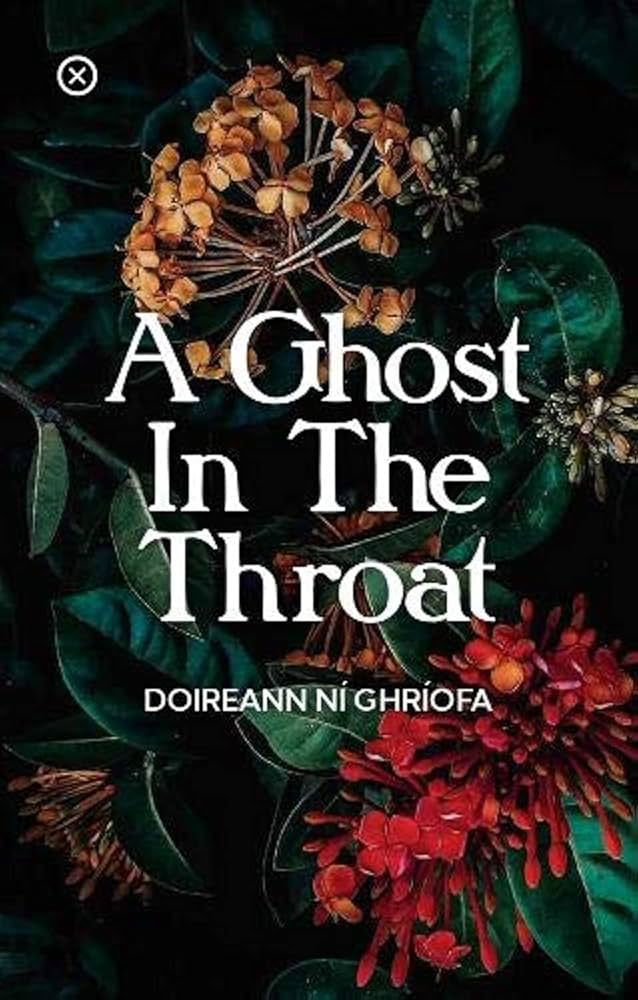
After I read several books by Clare Keegan, I turned to A Ghost in the Throat by Doireann Ní Ghríofa. Katarzyna highly recommended the book and I was absolutely mesmerized by this is a haunting, genre-defying book that moves between memoir, literary criticism, and poetic meditation. At its center is an eighteenth-century Irish poem, Caoineadh Airt Uí Laoghaire (The Lament for Art O’Leary), and the life of its author, Eibhlín Dubh Ní Chonaill—a woman whose voice echoes across centuries. Ní Ghríofa weaves her own experiences of motherhood, language, and embodiment into a meticulous, obsessive act of reading and translation, showing how literature can inhabit the body as much as the mind. The book is as much about inheritance and voice as it is about grief, desire, and devotion to words. Quietly radical and deeply intimate, A Ghost in the Throat reveals how texts survive not only through preservation, but through being lived with—spoken, carried, and loved. Here is an interview with the author; listen in, you will enjoy it, I did.
Beyond Fiction: Reading as a Migration Scholar

I obviously did not read only fiction. As a migration scholar, academic reading is a constant part of my everyday work, even though it is a very different kind of reading—one that involves tracing arguments, looking up concepts, situating texts within broader theoretical debates, and continually comparing my own findings with those of other researchers. This form of reading is often more purposeful and demanding, yet it is essential for refining questions, sharpening analysis, and remaining in dialogue with the field.
Among the academic literature I read this year, one book stood out in particular: Juyeon Park’s Families for Mobility: Elite Korean Students Abroad and Their Parents’ Reproduction of Privilege. Through rich, nuanced ethnography, Park examines how transnational education becomes a family strategy for securing social advantage, revealing mobility as a deeply relational and intergenerational project rather than an individual achievement. The book offers a compelling analysis of how privilege is actively produced and sustained through parental labor, sacrifice, and long-term planning, while also attending to the emotional and moral dimensions of these choices. What made this book especially resonant for me was its careful balance between structural analysis and intimate family narratives, making it both analytically rigorous and deeply human—and a valuable point of reference for my own work on migrant children and education.
"Open the book to page ninety-nine and read, and the quality of the whole will be revealed to you." --Ford Madox Ford
Here is a link to p. 99 of Park's ethnography. As she wrote "Although this page does not present the core argument of the study, it offers an important example that illustrates the diversity among my participants." If you read it, it will also give you a glimpse into P{ark's ethnographic writing. She definitely sets the bar high!


Comments